Brian R. Davis

AI supplies the iterations. Systems thinking supplies the validator.

Everything here started with a problem I saw across the table from a founder or in a classroom. AI did much of the building. Deciding what counts as right, and checking that it is, stayed with me.

Mentoring toolkit

A product idea isn't a business. A business is the system that makes selling it repeatable, and most of what sinks a new one is a constraint nobody saw in time. These tools help founders see their system and find out what they don't yet know.

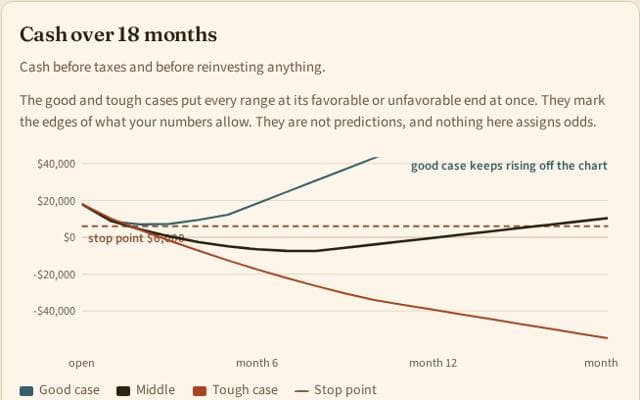
Cash-over-time chart from the break-even tool, showing good, middle, and tough cases against a stop point

Live demo

Break-even under uncertainty

Most break-even tools ask founders to predict their sales. This one works out what has to be true for the business to cover its costs, and shows how much of that the founder actually knows. Three example businesses are built in: retail, service, and manufacturing.

  • Founders say where each number came from. The tool decides whether it's a fact, evidence, or a guess.
  • No odds anywhere. Putting probabilities on guesses makes them look like knowledge.
  • Staff, capacity, and owner time are built in, because a result that looks too good usually means a limit is missing.
  • It points to the one guess most worth testing, then hands the whole picture to any free AI tool with instructions not to invent certainty.
Open the demo

In development

  • Is this a business yet?From product idea to the system around it: who buys, how they find you, where the cash waits.
  • Startup costsEvery line tagged by where it came from, with a contingency sized to what's still a guess.
  • PricingWorks backward from costs and required volume to a price floor, then compares it with the market.
  • OperationsVendors, space, inventory, and staffing, with the limits each one sets.
  • Customer discoveryAI generates the candidates. Contact with real customers decides which survive.
  • Plan builderAssembles everything into a business plan draft, with every gap marked instead of filled.
  • GrowthWhere surplus should go: relieving the next constraint before it binds.

The tools will share one business file saved on the owner's own computer. Nothing is sent anywhere.

Economics teaching tools

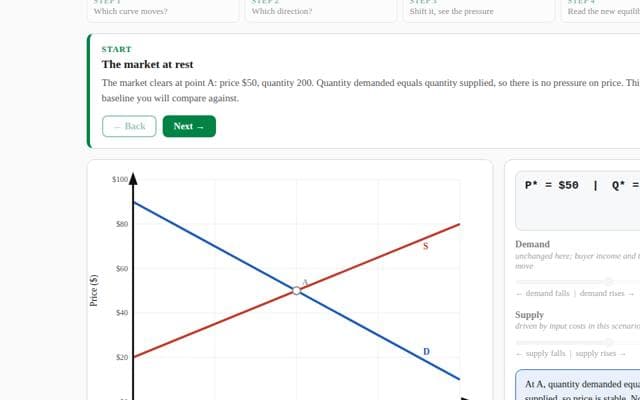
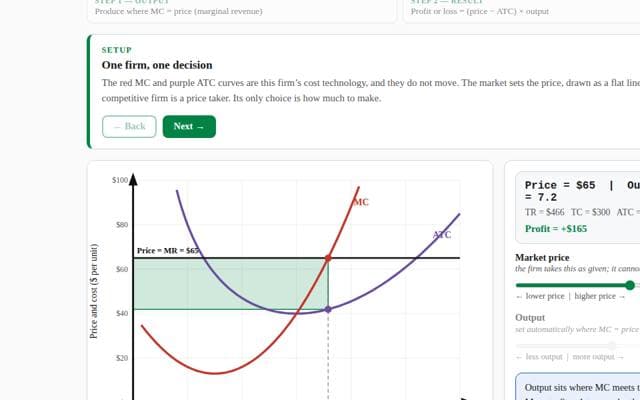
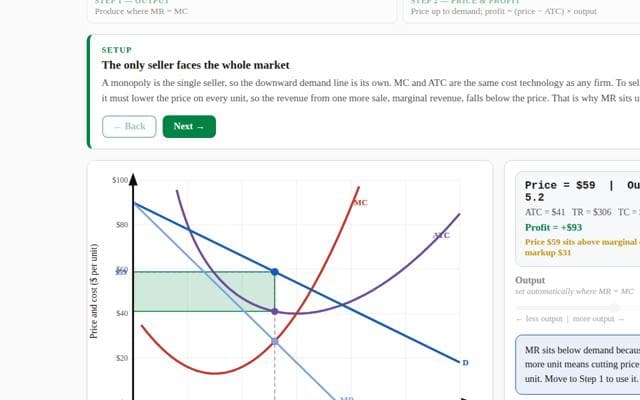
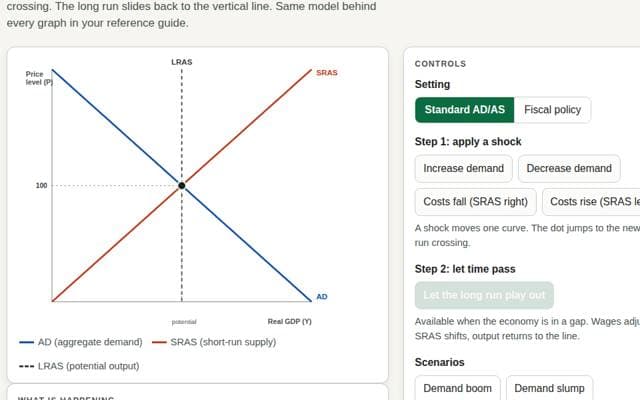
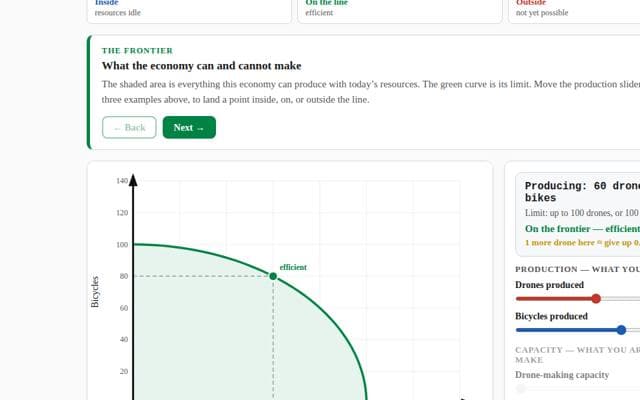
Built for Introduction to Economics at Crafton Hills College, taught fully online, including dual-enrollment sections. The course platform strips out interactivity, so these are hosted separately and linked in. Students explore each graph as many times as they need, with nothing to submit.

Also built for the course

  • The Economist's NotebookTwelve chapters of lessons built to work inside the course platform.
  • Concept CorrectionA two-tier assessment that replaced graded discussion posts: a private graded tier and an optional public one.
  • Thinking Like an EconomistA reply rubric that rewards reasoning over recall.

Business intelligence

Dashboards and reporting built for decisions, with clarity over volume.

In progress

Calibration dashboard

A Looker Studio dashboard for a fictional retailer that compares planned ranges with actual results month by month, showing where reality landed inside or outside each band. It's the after-launch view of the same system the mentoring tools map before launch.

About

I fix things. Sometimes that means soldering a circuit board. Sometimes it means helping someone turn a business idea into a plan they can actually execute. Sometimes it means working through why markets behave the way they do with a room full of students.

I've owned retail businesses, supervised an IT help desk, taught economics, and mentor founders as a volunteer. The thread through all of it is systems: how they work, why they break, and what it takes to rebuild them from the inside out.

© 2026 Brian R. Davis